
Why Tile Underlayment Fails Before the Tile
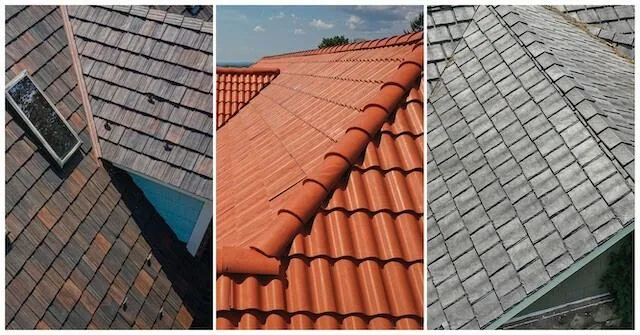
Concrete and clay tile outlive the paper beneath them by decades, which is why an West Los Angeles tile roof can leak while the tile still looks new.
Tile confuses people, and understandably so. You look up, the tile is intact, the color is fine, nothing is broken — and there is a stain spreading across the hallway ceiling. The explanation is that tile is not the waterproofing. It is a shield that takes the sun, the wind and the physical abuse. The actual water barrier is the underlayment stapled to the deck beneath it, and that material has a far shorter life than the tile sitting on top of it.
The arithmetic nobody explains at the sale
A concrete tile will do fifty years and often more. The organic felt used under tile roofs for decades was good for perhaps twenty to twenty-five in this climate, and frequently less on a south or west exposure. So a tile roof installed in the 1990s is, right now, sitting on paper that is out of life while the tile itself is barely middle-aged. That gap is the single most common reason we get called to a tile house in West Los Angeles, and it catches owners off guard because nothing looks wrong.
What the east Valley does to it
Heat is the driver. Summer afternoons here run hot and long, and the air space under tile turns into an oven — surface temperatures well above ambient, day after day, for months. Asphalt-saturated felt dries out, loses its oils, goes brittle and starts to crack around every fastener. Then the winter rains arrive in short heavy bursts, wind-driven, and water that the tile sheds sideways finds paper that can no longer flex. Add the Santa Anas lifting and rattling field tile through the fall and you have a cycle that ages underlayment faster than the same material would age on a shaded coastal roof.
What failure looks like from inside
- Stains that appear during heavy rain and dry out completely afterward, then return the next storm
- Leaks that show up well away from any cracked tile, because water travels along the deck before it finds a seam
- Granules and black grit in the gutters from felt breaking down, with no shingle roof on the house to explain it
- Valleys that weep first, since that is where the most water concentrates on the least material
- Fastener heads visible from the attic with rust rings around them
Why patching rarely holds
When underlayment reaches the end, it reaches the end everywhere at once. The section that leaked is not defective — it is simply the first place the water found a path. Sealing that spot moves the leak a few feet. This is why a competent tile contractor in West Los Angeles will push you toward a lift-and-relay rather than a repair once the paper is past twenty years: the tile is lifted and stacked, the old felt stripped, new underlayment installed, and the original tile set back down with broken pieces replaced. You keep the expensive part and renew the part that wore out.
Common questions
Can I tell the age of the underlayment without lifting tile?
Not reliably from the ground. Lifting a few field tiles in two or three locations takes fifteen minutes and tells you everything — whether the felt is still pliable, whether fasteners have rusted, whether the deck beneath is dry.
Is synthetic underlayment worth the upgrade?
On a tile roof in this heat, yes. The better synthetics and the heavier self-adhered membranes are rated far beyond old-style felt and cost a fraction of the labor to install them. When the labor is the expensive part, buying the cheap material makes no sense.
The honest summary
Judge a tile roof by the date of the underlayment, not the condition of the tile. If your West Los Angeles house has had the same paper under it since the nineties, you are on borrowed time regardless of how good the roof looks from the driveway.
Free inspection, drone photography where access is difficult, and a written estimate with deck repair priced per sheet. No obligation.
More on Tile Roofing
- Mortar Failure at Hips and Ridges — A Practical GuideTile Roofing
- Mortar Failure at Hips and Ridges — Questions to AskTile Roofing
- Matching Discontinued Tile Profiles in Los Angeles — Contractor PerspectiveTile Roofing
- Matching Discontinued Tile Profiles in West Los Angeles — Inspection NotesTile Roofing