
Laying Over vs Tearing Off: The Honest Answer
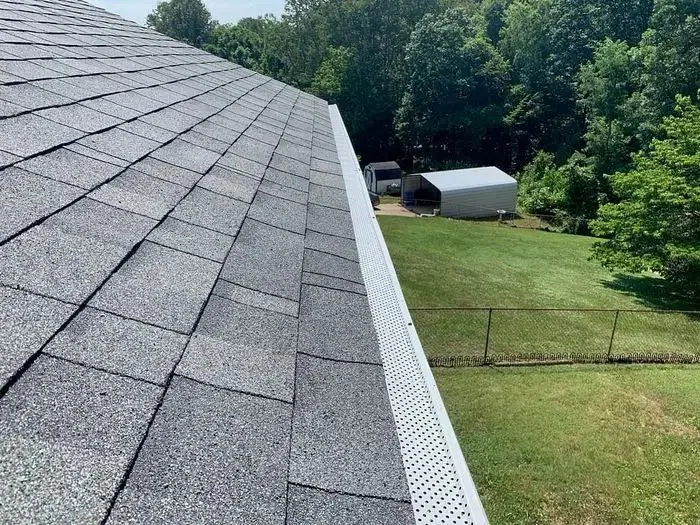
Whether a second layer of shingles is a smart saving or an expensive delay, judged against the way West Los Angeles houses were actually built.
Almost every West Los Angeles homeowner who calls about a worn comp roof asks the same question within the first two minutes: can we just go over it? It is a fair question. A layover skips the tear-off labor, the dump fees and most of the mess, and on paper it looks like a third off the job. The honest answer is that it works on a narrow set of roofs and quietly costs money on all the rest, and the difference has less to do with the shingles than with what is underneath them.
What the code actually allows
West Los Angeles sits inside the City of Los Angeles, so the permit and inspection go through LADBS rather than a county office. Two layers of composition is the ceiling, and that assumes the existing layer is flat, dry and firmly attached, and that the framing can carry the added weight. A roof already carrying two layers has no legal path to a third. A roof with one layer of tile, wood shake residue or a low-slope section is out of the conversation as well. Nobody should be quoting you a layover before somebody has counted the layers at a rake edge or a plumbing penetration.
Why so many West Los Angeles roofs fail the test
Most of the housing stock here went up between the late 1940s and the early 1960s — single-story tract homes, shallow pitches, deep eaves, attached garages that were often added or enclosed later. Two things follow from that. The first is that a sixty-year-old roof has usually been done twice already, so the layer count is against you before anyone climbs up. The second is that those garage roofs and rear additions are frequently low-slope, and a low-slope section wants a membrane or a coating system, not a second course of shingles pretending the pitch is steeper than it is.
There is also the framing. Lighter rafters on wide centers were normal for tract construction of that era, and while a second layer of architectural shingle is not a catastrophic load, it is real weight added to a structure that was sized for one layer and nothing else. On a house that has had a room addition or a re-framed section, the load path is rarely as uniform as the original plans suggest.
What you give up
- The deck stays hidden, so soft plywood, past leak damage and rusted flashing go unseen and unrepaired
- The new shingles telegraph every ridge, cup and gap in the old layer, which shows from the street within a year or two
- Heat builds between the layers, and in an east Valley summer that shortens the life of the new layer measurably
- Most manufacturers reduce or void the warranty on a layover, so you lose the paperwork that makes a premium shingle worth buying
- The next roof has to include a two-layer tear-off, which costs more than the one you avoided
When a layover is genuinely reasonable
One flat, sound layer. A deck nobody has any reason to doubt. A homeowner selling within a couple of years who needs the roof to pass inspection and look presentable, and who is being told plainly that the buyer inherits a shorter clock. A rental where the arithmetic is about the next five years rather than the next twenty. Those are real situations and we have done the work. The problem is not layovers as such — it is layovers sold as equivalent to a tear-off.
Common questions
How much does the layover actually save?
Typically twenty to thirty percent on a straightforward single-story West Los Angeles house, with most of that being labor and disposal. Divide that saving across the years you lose off the back end and the advantage usually disappears.
Will an inspector catch it?
On a permitted job, yes. Layer count is one of the first things checked, and an unpermitted re-roof surfaces later anyway — at resale, on an insurance inspection, or the first time a claim gets examined closely.
The honest summary
If your roof is on its first layer, the deck is sound and the pitch is right, a layover is a legitimate way to buy ten to twelve years. On most West Los Angeles homes at least one of those three is false, and the tear-off is not the expensive option — it is the one that lets somebody look at the deck before it is sealed up for another decade.
Free inspection, drone photography where access is difficult, and a written estimate with deck repair priced per sheet. No obligation.